Research

Work
In-Progress
Coordination or Control? Reassessing Civil-Military Cooperation during Counterinsurgency
The importance of civil-military cooperation in counterinsurgency has long been a tenet of faith among doctrine and practitioners. But, historically, cooperation has been a major challenge and tensions between civilian and military actors have undermined campaign planning. Coordination is hindered by different and often competing priorities held by these different stakeholders, and this often triggers a struggle within a counterinsurgency campaign over strategic direction and command authority. This challenge often must be solved through the creation of command and control institutions which subordinates one set of interests to another.
My current project analyzes the impact of different structures designed to coordinate campaign strategy and operations, comparing decentralized committee and centralized single commander systems in the Palestinian Rebellion and the Malayan Emergency. I show that committee systems often exacerbated the negative effects of interagency disagreement while integrating chains of command under the control of a single agency overcame the negative effects of disagreement. However, centralization tends to create a severe principal-agent problem where the narrow preferences of a single agency subvert balanced campaign strategy and goals. This dilemma provides a new explanation for why counterinsurgency is such a struggle.
My research shows that institutional design is a core element of campaign planning because it determines how strategy is implemented on the ground.
The Gulf and the Arab-Israeli Peace Process
Fluctuating Gulf engagement with Israel and support for the Palestinians reflects security dynamics within the Persian Gulf subregion as Arab Gulf states respond to security threats from Iraq, Iran, and domestic opposition movements that use the Palestinian issue as a normative weapon against pro-Western regimes. Gulf states have had to balance their desire to align with the US to guard against military threats with strong pressure to conform to Arabist and Islamist norms to support the Palestinians or risk losing legitimacy and generating widespread opposition.
I am currently working on a paper tracing the evolution of Saudi and Emirati engagement with Israel from the 2002 Arab Peace Initiative through the Abraham Accords and current discussions of possible Saudi-Israeli normalization. The API focused on developing a united Arab front predicating full normalization with Israel on a solution to the Palestinian issue and rejected any bilateral negotiations. The Abraham Accords was a series of bilateral normalization agreements that all but abandoned the Palestinian cause in favor of signatories’ national interests. We argue that this shift was incentivized by the impact of the Arab Spring on the regional security environment in three ways that created opportunities for engagement with Israel. First, the Arab Spring led to a decline in ideological politics as both Islamist movements and the Arab consensus collapsed. Second, the outbreak of civil wars escalated Arab Gulf rivalries with Iran leading to heightened military threats. Finally, Gulf states cracked down on domestic opposition, making them less vulnerable. These shifts lowered the costs of engaging Israel and breaking with pro-Palestinian norms while incentivizing cooperation with Israel against a heightened threat from Iran alongside collaboration on a range of economic sustainability goals.
A second project focuses on the history of Saudi leadership in the Arab-Israeli peace process. Saudi Arabia has been a leading player since the 1980s and the creation of the Fahd Plan. More recently, following 9/11, Crown Prince (and later King) Abdullah created the Arab Peace Initiative. Saudi leaders see the Arab-Israeli conflict as a source of three of distinct threats to the state’s security and the regime’s hold on power. First is the emergence of domestic (especially Islamist) challenges to Saudi Policy, seen to be strongly pro-US, undermining its Arab and Islamic legitimacy. Second support for the Palestinians and aggression towards Israel encourages a process of outbidding by regional rivals, at various times Egypt, Syria, Iraq, and Iran, which encourages conflict and undermines regional stability. Third Saudi Arabia’s negative image in the West, especially following 9/11, undermines US support for Saudi military security. Saudi rulers have seen engagement with the Arab-Israeli peace process as a way to address all three challenges. But as the severity of each changes over time, the Saudis have adapted the nature of their initiatives to meet the current environment, explaining why Saudi behavior has fluctuated over its history.
Future Research
Plans for upcoming projects
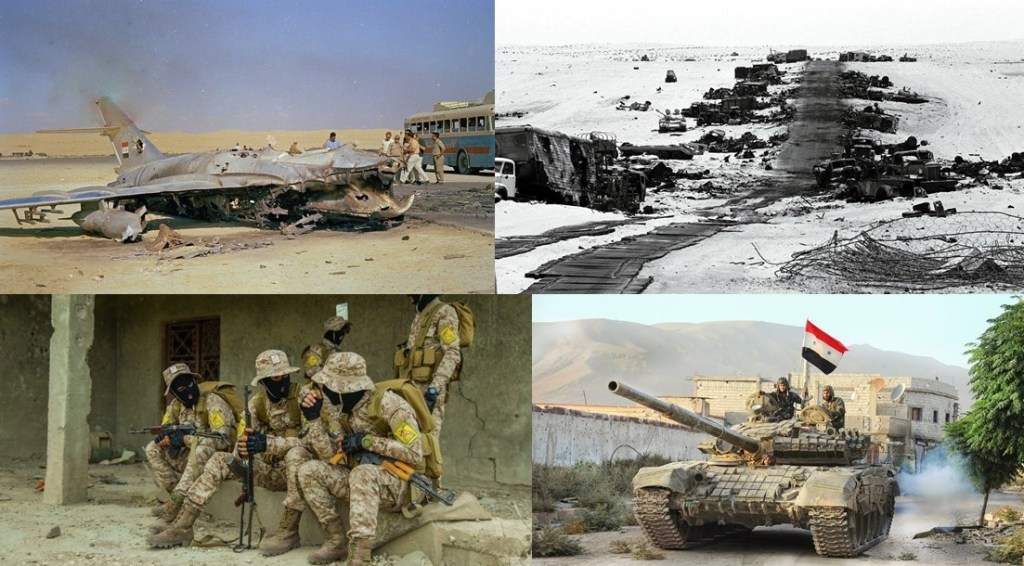
Military Ineffectiveness in the Middle East
My next major research project will address the ongoing debate over the sources of military ineffectiveness among Middle East, especially Arab, armies. Recent research has adopted the conservative, culturalist trope arguing that deficiencies in Arab culture undermine their ability to train, coordinate, and fight. This research has ignored the recent structuralist turn demonstrating how regimes facing internal threats tend to create armies ill-adapted for conventional combat, while also adopting inconsistent theoretical foundations and orientalist conceptions of Arab inferiority.
I aim to extend the structural argument to explain variation in battlefield performance in the Middle East by examining the ways in which different internal security and coup-proofing strategies impact military preparedness and battlefield performance. The project will examine the performance of Arab armies, including Egypt, Syria, Jordan, and Iraq in successive wars against Israel (’48, ’67, and ’73) to compare different armies against a single adversary as well as changes in each army over time to show that the cultural argument fails to explain variation in battlefield performance. I will then extend the analysis to analyze variation in battlefield performance in recent conflicts in the Middle East including wars in Syria, Iraq, and Yemen.
Past research
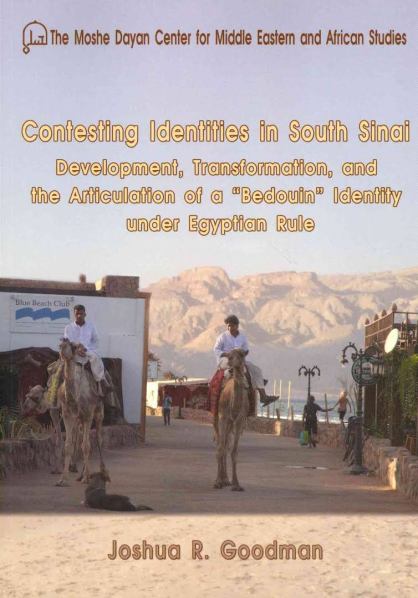
My first book, Contesting Identities in South Sinai, examines the impact of Egyptian development policies in South Sinai on the culture and identity of the Bedouin tribes that inhabit the area, arguing that increasing state penetration has led to the emergence of a Bedouin “ethnic” identity mobilized to resist state policies that favor migrants and multinationals over local inhabitants, and that increasing stateness is failing to encourage national integration and the internationalization of national identities and ideologies.
 Joshua R Goodman